Anxiety is the most common mental health condition in America. In 2025, an estimated 42.5 million U.S. adults are living with an anxiety disorder — and that figure doesn't count the tens of millions more who experience significant anxiety symptoms without a formal diagnosis. According to NIMH data, 19.1% of all U.S. adults experienced an anxiety disorder in the past year alone.
The causes are well-documented: financial pressure, social media, workplace stress, global uncertainty, chronic sleep deprivation. The result is a population that is chronically activated — stuck in a low-grade fight-or-flight state that the human nervous system was never designed to sustain indefinitely.
Most people who experience anxiety already know the clinical interventions: therapy (particularly CBT), medication (SSRIs, SNRIs, benzodiazepines), and exercise. These remain the gold standard for diagnosed anxiety disorders, and nothing in this article changes that.
But there is a growing body of peer-reviewed research examining specific botanical and nutritional ingredients that may support the nervous system's ability to regulate stress and anxiety — not as replacements for clinical care, but as genuine tools in a broader wellness approach. Some of these ingredients have been used medicinally for centuries. Others are backed by recent randomized controlled trials.
And increasingly, they're being formulated into beverages you can drink daily as part of a sober curious or alcohol-reduction lifestyle — replacing the anxiolytic effect of a glass of wine with something that calms the nervous system without the rebound anxiety that alcohol inevitably causes.
Here are the five drinks with the strongest scientific rationale for supporting anxiety management — and the clinical research behind each one.
Why Alcohol Makes Anxiety Worse — and What to Do Instead
Before we get to the five drinks, there's a critical piece of context most anxiety-and-beverage articles skip: alcohol is one of the most common anxiety triggers in existence.
Alcohol acts as a GABA agonist — it temporarily amplifies the effect of GABA, the nervous system's primary inhibitory neurotransmitter, producing short-term relaxation. This is why a glass of wine 'takes the edge off.' But as alcohol is metabolized, the body overcompensates by reducing its own GABA sensitivity and increasing glutamate activity — the nervous system's excitatory neurotransmitter. The result: 'hangxiety' — the rebound anxiety that follows drinking, often the morning after, that is frequently worse than the anxiety that prompted the drink in the first place.
This creates a self-reinforcing cycle: anxiety → drink to calm → rebound anxiety → drink again. Over time, this pattern both worsens baseline anxiety and increases tolerance, requiring more alcohol to achieve the same short-term relief.
|
🔬 The GABA-Glutamate Imbalance (Why Alcohol Makes Anxiety Worse Long-Term) When alcohol is consumed regularly, the brain adapts to its presence by down-regulating GABA receptor sensitivity and up-regulating glutamate receptors. This means that in the absence of alcohol, the nervous system is now running with less natural inhibition and more natural excitation — a state that manifests as anxiety, irritability, and sleep disruption. Research published in the journal Alcohol (National Institute on Alcohol Abuse and Alcoholism) confirms that alcohol use disorders are associated with significantly elevated rates of anxiety disorders — with causality running in both directions. |
This is why many people who reduce or eliminate alcohol as part of a sober curious lifestyle report significant reductions in their baseline anxiety within the first 2–4 weeks. The nervous system is rebalancing. And when that rebalancing is supported by specific functional drinks containing genuine anxiolytic ingredients, the transition can be both smoother and more effective.
To understand more about why reducing alcohol is one of the single most impactful steps for anxiety management, our piece on the health benefits of drinking less alcohol covers the full neurological, hormonal, and physiological improvements that typically emerge in the first 30–90 days of reduced drinking.
5 Drinks With Real Evidence for Anxiety Relief
A note on how to read the evidence: beverage research is genuinely complex. Most clinical studies use supplemental forms of these ingredients (capsules, standardized extracts) at specific doses. Drinks typically contain lower doses than clinical studies use, and bioavailability in liquid form varies. We're presenting the ingredient science honestly — showing what's been studied, at what doses, and what the evidence quality actually says. The drinks below contain these ingredients in forms and amounts that may support anxiety reduction, but are not pharmaceutical-grade interventions.
|
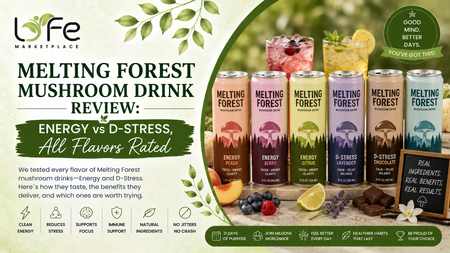
#1 Ashwagandha Drinks Key ingredient: Ashwagandha (Withania somnifera) — KSM-66® or Sensoril® standardized root extract How it works: Modulates the hypothalamic-pituitary-adrenal (HPA) axis — the body's central stress regulation system. Reduces cortisol secretion from the adrenal glands. Enhances GABA receptor sensitivity, producing calming effects. Acts as a bidirectional adaptogen, normalizing stress hormones whether high or low. Evidence level: Strong — Multiple randomized, double-blind, placebo-controlled trials. Best-studied botanical for anxiety reduction. 📊 Study finding: A 2023 double-blind RCT published in Medicine (Majeed et al.) found standardized ashwagandha root extract significantly reduced anxiety, stress scores, cortisol levels, and improved quality of life vs. placebo over 8 weeks. A 2019 study (Langade et al., Cureus) found 300mg KSM-66 twice daily reduced anxiety scores by 41% vs. placebo. 🛒 Available at Lyfe Marketplace: Moment Calm drink (200mg KSM-66 ashwagandha), Melting Forest adaptogen beverages |
|
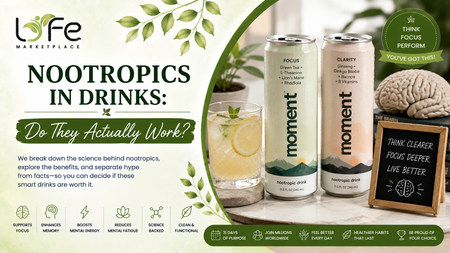
#2 L-Theanine Drinks Key ingredient: L-theanine — amino acid naturally found in Camellia sinensis (green, black, white, oolong tea). Also synthetically derived in supplements. How it works: Crosses the blood-brain barrier and increases alpha brain wave activity — the relaxed-but-alert brainwave state associated with meditation. Enhances GABA activity and increases serotonin and dopamine levels. Uniquely, L-theanine produces calm without sedation — it doesn't cause drowsiness at standard doses, making it ideal for daytime anxiety management. Evidence level: Moderate-to-Strong — Multiple controlled trials in humans. Particularly well-studied in combination with caffeine for focus + calm. 📊 Study finding: A 2020 Frontiers in Nutrition randomized controlled trial found L-theanine (200mg/day for 4 weeks) significantly reduced stress-related symptoms and improved cognitive performance. A 2016 Nutrients crossover trial (Kimura et al.) found 200mg L-theanine reduced autonomic markers of stress including heart rate and salivary immunoglobulin A during a stressful cognitive task. 🛒 Available at Lyfe Marketplace: Jibby Matcha (contains natural L-theanine from matcha), matcha-based functional drinks, Moment beverages |
|
#3 Magnesium-Rich Electrolyte Drinks Key ingredient: Magnesium (Mg²⁺) — particularly magnesium glycinate, malate, or citrate forms for highest bioavailability. How it works: Magnesium is a cofactor for GABA receptor function — the same pathway alcohol activates. It regulates the HPA axis and limits cortisol production. Magnesium deficiency is specifically associated with heightened stress reactivity and anxiety symptoms. It also modulates NMDA glutamate receptors, reducing excitatory nervous system activity. The overlap with anxiety neuropharmacology is striking. Evidence level: Moderate — Systematic reviews support magnesium for mild-to-moderate anxiety. A 2017 review of 18 studies (Boyle et al., Nutrients) found magnesium supplementation improved subjective anxiety, particularly in individuals with low dietary magnesium intake. 📊 Study finding: 2017 systematic review in Nutrients: magnesium supplementation was associated with reduced anxiety symptoms across multiple study designs. Note: 48% of Americans consume less magnesium than the RDA, making deficiency correction a plausible mechanism for many people. 🛒 Available at Lyfe Marketplace: LMNT Electrolyte Drinks (60mg magnesium malate per serving), electrolyte beverages with meaningful magnesium content (not trace amounts) |
|
#4 Kava Drinks Key ingredient: Kava (Piper methysticum) — standardized kavalactone extract from the root of the kava plant, traditionally consumed in Pacific Island cultures. How it works: Kavalactones (specifically kavain, dihydrokavain, and methysticin) bind directly to GABA-A receptors — the same receptor type targeted by benzodiazepine medications like Valium, but via a different binding site. They also inhibit voltage-gated sodium and calcium channels, reducing neuronal excitability. Unlike alcohol and benzodiazepines, kavalactones produce anxiolysis without cognitive impairment, dependence, or significant sedation at moderate doses. Evidence level: Strong for short-term anxiety reduction — Cochrane Review (2003, updated evidence) found kava significantly more effective than placebo for anxiety. Multiple RCTs confirm anxiolytic effects. Comes with important safety caveats around liver health. 📊 Study finding: A Cochrane systematic review of kava for anxiety found statistically significant superiority over placebo across multiple trials measuring the Hamilton Anxiety Rating Scale (HAM-A). Effect sizes are comparable to some pharmaceutical anxiolytics at equivalent doses. 🛒 Available at Lyfe Marketplace: Kava drinks at Lyfe Marketplace — traditional kavalactone beverages for natural relaxation |
|
#5 Adaptogen Blend Drinks (Rhodiola + Reishi) Key ingredient: Rhodiola rosea (rosavins + salidroside) + Reishi mushroom (triterpenes + beta-glucans) — combined adaptogenic formula. How it works: Rhodiola modulates serotonin and dopamine neurotransmitter systems, reduces cortisol, and improves stress tolerance — specifically targeting anxiety related to burnout and mental fatigue. Reishi's triterpenes have GABA-modulating properties and reduce neuroinflammation, which emerging research links to anxiety pathophysiology. Together, they address both the HPA axis (cortisol dysregulation) and neurotransmitter balance. Evidence level: Moderate — Rhodiola has multiple RCTs for burnout and stress-anxiety specifically. Reishi evidence is more preclinical but mechanistically plausible. Combined adaptogen formulas show promise in functional beverage studies. 📊 Study finding: A 2009 RCT in Phytomedicine (Darbinyan et al.) found rhodiola rosea extract significantly reduced burnout symptoms and improved mood in stressed physicians. A 2020 meta-analysis confirmed reishi's effects on fatigue and quality of life markers associated with anxiety. 🛒 Available at Lyfe Marketplace: Melting Forest functional mushroom drinks, Odyssey Elixir adaptogen beverages at Lyfe Marketplace |
Evidence Summary: How These 5 Ingredients Compare
Not all of these ingredients have equal evidence quality. Here's a clear-eyed summary of the research landscape:
|
Ingredient |
Evidence Strength |
Typical Dose (studied) |
Key Mechanism |
|
Ashwagandha |
⭐⭐⭐⭐⭐ Strong |
300–600mg/day |
HPA axis modulation, cortisol reduction, GABA enhancement |
|
L-Theanine |
⭐⭐⭐⭐ Moderate+ |
200–400mg/day |
Alpha wave increase, GABA + serotonin + dopamine enhancement |
|
Magnesium |
⭐⭐⭐⭐ Moderate |
200–400mg/day |
GABA receptor cofactor, NMDA glutamate inhibition, cortisol limit |
|
Kava |
⭐⭐⭐⭐⭐ Strong |
70–240mg kavain/day |
GABA-A receptor direct binding, kavalactone anxiolysis |
|
Rhodiola + Reishi |
⭐⭐⭐ Moderate |
300mg+ rosavins |
Serotonin/dopamine modulation, neuroinflammation reduction |
One important contextual note: many of these ingredients work better for situational and chronic stress-related anxiety than for acute panic attacks or clinically severe anxiety. If you experience panic attacks, intrusive thoughts, or anxiety that significantly impairs daily functioning, please work with a licensed clinician alongside any lifestyle interventions.
The connection between anxiety and sleep is also worth noting: anxiety disrupts sleep, and poor sleep worsens anxiety — a feedback loop that functional drinks can help interrupt. Our piece on whether non-alcoholic drinks can help you sleep better covers the specific ingredients (magnesium, L-theanine, ashwagandha) that research links to improved sleep quality — a directly relevant read for anyone managing anxiety.
How to Build an Anti-Anxiety Drink Routine That Actually Works
Understanding which ingredients help anxiety is only half the picture. The other half is how to incorporate them effectively into a daily routine. Here's what the evidence and practical experience suggest:
Timing Matters More Than Most People Realize
Different anxiolytic ingredients peak at different times and serve different anxious states. Here's the framework:
|
Time of Day |
Best Ingredient |
Why |
|
Morning (wake-up) |
L-theanine + matcha |
Calm alertness — reduces morning anxiety without sedation. Matcha's caffeine + L-theanine ratio is uniquely anxiety-friendly. |
|
Mid-morning |
Ashwagandha drink (Moment) |
Takes the cortisol edge off as the day's pressure builds. KSM-66 works best with consistent AM use. |
|
Afternoon / 3pm slump |
Rhodiola adaptogen drink |
Combats the mental fatigue-anxiety cycle. Energizing without stimulation, mood-stabilizing. |
|
Pre-social event |
Kava drink (30–45 min before) |
Kavalactones reduce social anxiety and produce genuine relaxation within 30–45 minutes of consumption. |
|
Evening wind-down |
Magnesium electrolyte drink |
Magnesium's GABA-potentiating effect is particularly effective for evening relaxation and pre-sleep anxiety reduction. |
|
Bedtime |
Reishi + ashwagandha blend |
Reishi's GABA-modulating triterpenes promote sleep. Ashwagandha reduces cortisol that would otherwise prevent sleep onset. |
|
💡 Key Insight: Consistency is the key variable: most of these ingredients — especially ashwagandha and rhodiola — produce their strongest effects after 2–6 weeks of daily use, not after a single drink. Think of them as nervous system recalibration tools rather than immediate anxiolytics. Kava is the exception — its effects are typically felt within 30–60 minutes. |
Drinks That Worsen Anxiety: What to Reduce or Eliminate
Choosing the right drinks is only half the equation. Understanding which drinks actively worsen anxiety — often while appearing to relieve it short-term — is equally important.
Alcohol
As covered in the introduction: short-term GABA agonist effect → rebound anxiety, worsened baseline anxiety with regular use, disrupted sleep quality (REM reduction), and increased cortisol secretion. This is why reducing or eliminating alcohol is the single most impactful dietary intervention for anxiety — typically producing measurable anxiety reduction within 2–4 weeks of abstinence. Beyond anxiety, the broader health benefits of drinking less alcohol extend to sleep quality, cardiovascular function, and cognitive clarity — all of which are bidirectionally linked to anxiety.
High-Caffeine Energy Drinks
Caffeine is a direct adenosine receptor antagonist — it blocks the receptors that signal relaxation and tiredness. In anxious individuals, caffeine amplifies sympathetic nervous system activation (the fight-or-flight response), elevates cortisol, and can trigger panic-like symptoms in people with existing anxiety disorders. The difference between a matcha L-theanine combination (mild caffeine + anxiolytic L-theanine) and a 200mg caffeine energy drink is significant — the latter is contraindicated for anxiety-prone individuals.
High-Sugar Sodas
Blood sugar spikes followed by rapid crashes are a direct trigger for anxiety symptoms — the drop in blood glucose activates the adrenal glands to produce cortisol and adrenaline to bring glucose back up, producing physical anxiety symptoms (racing heart, trembling, irritability). Replacing high-sugar drinks with prebiotic sodas (OLIPOP, Poppi) or sparkling waters eliminates this blood sugar anxiety loop while maintaining the ritual of a cold, flavored beverage.
A Special Note on Kava: The Most Powerful and the Most Controversial
Kava deserves its own section because its evidence for anxiety reduction is genuinely strong — comparable to some pharmaceutical anxiolytics in certain studies — but it also comes with meaningful safety considerations that distinguish it from the other drinks on this list.
The primary concern is hepatotoxicity (liver damage) — there are documented cases of kava-associated liver injury, primarily linked to:
• Use of kava made from stems, leaves, or mold-contaminated roots (rather than the root itself)
• Acetonic or ethanolic kava extracts (rather than traditional water-based preparation)
• Very high doses used over extended periods
• Combination with other hepatotoxic substances, including alcohol and certain medications
Traditional kava, prepared using water-based extraction from the root (the method used in Pacific Island cultures for thousands of years), has a significantly lower hepatotoxicity risk. The World Health Organization reviewed the evidence and concluded that appropriately prepared traditional kava consumed in moderate amounts is unlikely to cause liver damage in healthy individuals.
Practical guidance: choose kava products that specify noble kava varieties and traditional root extraction. Avoid combining kava with alcohol. If you have liver disease or take medications that affect liver function, consult your physician before using kava. And approach kava as an occasional anxiolytic — not a daily habit at high doses.
For the broader context of how kava fits into the non-alcoholic wellness drink landscape and the sober curious lifestyle — particularly as an alcohol replacement for social situations — our complete overview of what sober curiosity means is a useful companion read.
Frequently Asked Questions
Can drinks actually help anxiety, or is this just marketing?
Both exist. Some functional drinks contain well-studied anxiolytic ingredients at doses that have clinical evidence behind them. Ashwagandha (at 300–600mg/day), L-theanine (200–400mg/day), magnesium, and kava (at appropriate kavalactone doses) all have peer-reviewed randomized controlled trial evidence for reducing anxiety symptoms in humans. However, many 'anxiety relief' drinks contain these ingredients at token doses — 25mg of ashwagandha versus the 300mg studied — which are unlikely to produce meaningful effects. Read the ingredient label and dose carefully, not just the marketing copy on the front of the can.
How quickly do anxiety-reducing drinks work?
It depends on the ingredient. Kava typically produces noticeable relaxation within 30–60 minutes of consumption — it's the most acutely effective. L-theanine produces mild calming effects within 30–45 minutes in most people. Magnesium's effects on evening anxiety and sleep quality are typically felt within 1–2 hours when taken in the evening. Ashwagandha and rhodiola, being adaptogens, are not acute anxiolytics — they require 2–6 weeks of consistent daily use to produce their cortisol-reducing, HPA-axis-modulating effects. Think of adaptogens as recalibrating your baseline anxiety over time, not as immediate relief tools.
Is it safe to use these drinks alongside anxiety medication?
This is a question for your prescribing physician, not a wellness blog. Certain ingredients have known interactions with psychiatric medications: ashwagandha may potentiate sedative drugs; kava can interact with benzodiazepines and alcohol; L-theanine may enhance the effect of CNS depressants. Magnesium is generally safe alongside most medications at typical doses but can affect the absorption of some antibiotics. Always disclose all supplements and functional drinks to your doctor when managing anxiety with medication.
What's the best drink to start with if I've never tried functional beverages for anxiety?
Start with an ashwagandha drink or L-theanine matcha — both have the strongest evidence, the most predictable safety profiles, and the most consistent user experiences for mild-to-moderate anxiety. Moment (ashwagandha) is the most purpose-built anxiety-targeting functional drink available at Lyfe Marketplace. Jibby Matcha Latte provides a natural L-theanine source with a genuinely enjoyable flavor profile. Both can be incorporated easily into a daily morning or evening routine. If you want something for acute situational anxiety (before a presentation, a social event), kava is worth exploring — starting with a single serving from a reputable brand to assess your response.
|
Shop Adaptogen & Nootropic Drinks at Lyfe Marketplace Ashwagandha, lion's mane, magnesium-rich, L-theanine, and kava drinks — all curated from the best functional beverage brands. Shipped from Texas. |