Your cortisol levels are rising. Your adrenal glands are firing. Your hypothalamic-pituitary-adrenal axis — the body's central stress-response system — is doing exactly what 200,000 years of human evolution designed it to do: get you ready to fight or flee.
The problem? That system was built for short, sharp threats. A predator. A physical confrontation. A genuine emergency. It was not built for a never-ending stream of work deadlines, financial pressure, social media notifications, and sleep deprivation — the kind of slow-burn, chronic stress that defines modern life.
This is where adaptogens come in. These are plants and fungi that have been used in traditional medicine systems for thousands of years — and that modern science is increasingly validating as genuine tools for helping the body adapt to exactly this kind of chronic, accumulated stress.
The adaptogenic beverage market was valued at $1.5 billion in 2025 and is projected to reach $2.5 billion by 2034. But the real story isn't the market size — it's the science behind why these ingredients work, and why millions of Americans are now choosing functional drinks built around them instead of their morning coffee or evening alcohol ritual.
This is the complete guide. Let's start at the biology.
The Scientific Definition: What Does 'Adaptogen' Actually Mean?
The term adaptogen was first coined in 1947 by Soviet pharmacologist Nikolai Lazarev, who was researching compounds that could help soldiers and workers perform better under extreme conditions. His definition has held up remarkably well: an adaptogen is a substance that increases the body's nonspecific resistance and normalizes the functions of the organism.
In plain language, this means three things:
• Adaptogens help the body resist multiple types of stress simultaneously — physical, chemical, and biological
• They work on the body's central stress-response system, the HPA axis, rather than on any single organ or system
• Their effect is normalizing — they bring the body back toward balance (homeostasis), rather than pushing it in one direction
|
🔬 The HPA Axis — Your Body's Stress Control Center The hypothalamic-pituitary-adrenal (HPA) axis is the body's central stress-response network. When a stressor is detected, the hypothalamus releases CRH (corticotropin-releasing hormone), which triggers the pituitary gland to release ACTH, which signals the adrenal glands to produce cortisol — the body's primary stress hormone. In chronic stress, this system becomes dysregulated: cortisol stays elevated, the immune system weakens, sleep quality drops, and cognitive function deteriorates. Adaptogens work by modulating this axis — helping cortisol return to baseline faster, and preventing the chronic dysregulation that leads to burnout. |
This is the key biological distinction between adaptogens and stimulants. Caffeine pushes your stress system into overdrive and then leaves you to crash. Alcohol chemically suppresses your nervous system (which is why it feels relaxing) and then creates rebound anxiety. Adaptogens do neither of these things. They work with your stress system, not against it.
The 5 Most Important Adaptogens in Functional Beverages Today
Not all adaptogens are equal in terms of research quality, bioavailability in drink form, or practical effectiveness. Here are the five that matter most — the ones you'll find in the best functional drinks on the market, backed by the strongest scientific evidence.
|
Ashwagandha (Withania somnifera) Origin: Ayurvedic medicine, India — 3,000+ years of documented use How it works: Modulates the HPA axis directly, reducing cortisol production and regulating adrenal gland activity. The KSM-66® standardized extract is the most bioavailable form. Primary benefit: Stress and anxiety reduction, improved sleep quality, cortisol regulation, testosterone support Best for: Chronic stress, anxiety, poor sleep, burnout, mental fatigue 📊 Science: Clinical studies show 300mg/day of ashwagandha root extract produced a 27–30% reduction in serum cortisol levels vs. placebo (Journal of the American Nutraceutical Association, 2019). |
|
Rhodiola Rosea Origin: Traditional medicine of Russia, Scandinavia, and Central Asia — used by Viking warriors and Soviet cosmonauts How it works: Activates the synthesis of ATP in mitochondria. Modulates cortisol release. Influences serotonin and dopamine receptor sensitivity, improving stress-induced mood dysfunction. Primary benefit: Mental fatigue reduction, cognitive performance under stress, mood stabilization, endurance Best for: Mental burnout, exam stress, high-demand work environments, physical training 📊 Science: A randomized controlled trial (Phytomedicine, 2009) found rhodiola significantly reduced burnout symptoms and improved cognitive function and mood in stressed physicians after just 6 weeks. |
|
Lion's Mane (Hericium erinaceus) Origin: Traditional Chinese Medicine — used for cognitive support and digestion for centuries How it works: Stimulates the synthesis of Nerve Growth Factor (NGF) — a protein essential for the growth, maintenance, and survival of neurons. Unlike most adaptogens, lion's mane works specifically on the brain and nervous system. Primary benefit: Cognitive function, memory, focus, mood, neuroprotection Best for: Brain fog, cognitive decline, focus issues, nootropic-seeking users 📊 Science: A 2009 double-blind placebo-controlled study (Phytotherapy Research) found significant improvement in cognitive function scores in adults 50–80 after 16 weeks of lion's mane supplementation. NGF stimulation confirmed in multiple in-vitro and animal studies. |
|
Reishi (Ganoderma lucidum) Origin: Traditional Chinese Medicine — called the 'Mushroom of Immortality' for over 2,000 years How it works: Contains triterpenes and beta-glucans that modulate the immune system and reduce inflammation. Influences GABA receptors, promoting relaxation without sedation. Supports adrenal gland regulation. Primary benefit: Immune support, stress resilience, sleep quality improvement, inflammation reduction Best for: Immune support, sleep issues, stress-induced inflammation, chronic fatigue 📊 Science: Beta-glucans in reishi have demonstrated immunomodulatory effects in multiple peer-reviewed studies. A 2020 meta-analysis (Medicine) confirmed significant improvements in fatigue and quality of life in cancer patients using reishi supplementation. |
|
Cordyceps (Cordyceps militaris) Origin: High-altitude traditional Tibetan and Chinese medicine — historically harvested from caterpillar fungi in the Himalayas How it works: Increases ATP (adenosine triphosphate) production in cells — the body's fundamental energy currency. Improves oxygen utilization (VO2 max). Supports adrenal function without cortisol spike. Primary benefit: Energy and endurance, athletic performance, oxygen efficiency, anti-fatigue Best for: Athletes, active people, those with low energy or chronic fatigue, pre-workout alternatives 📊 Science: A study in the Journal of Dietary Supplements (2016) found cordyceps militaris supplementation significantly improved tolerance to high-intensity exercise and VO2 max after just 3 weeks in healthy adults. |
Adaptogens vs Nootropics: What's the Difference?
These two terms are often used interchangeably in the functional beverage world — but they refer to different mechanisms and different goals. Understanding the distinction helps you choose the right drink for your specific need.
|
|
Adaptogens |
Nootropics |
|
Primary goal |
Stress resilience & homeostasis |
Cognitive performance & mental clarity |
|
Mechanism |
HPA axis modulation, cortisol regulation |
Neurotransmitter support, blood flow, NGF |
|
Timeline |
Builds over 2–4 weeks of consistent use |
Some work acutely; others need weeks |
|
Key examples |
Ashwagandha, rhodiola, reishi |
Lion's mane, L-theanine, bacopa |
|
Best for |
Burnout, anxiety, chronic stress |
Focus, memory, cognitive performance |
|
Overlap? |
Yes — lion's mane acts as both |
Yes — rhodiola bridges both categories |
Many of the best functional drinks on the market now combine both categories — adaptogens for stress resilience and nootropics for cognitive enhancement — working synergistically in one formula. If you want to go deeper on the cognitive performance side of this picture, our guide to nootropics in drinks covers the specific compounds, doses, and brands doing this most effectively.
Why Adaptogen Drinks? The Case for Functional Beverages Over Supplements
You might be wondering: if these ingredients are available as capsules and powders, why does the delivery format matter? The answer comes down to three things: bioavailability, consistency, and ritual.
Bioavailability
Many adaptogenic compounds are fat-soluble or require a liquid medium for optimal absorption. Drinking adaptogens in a water-based, carbonated format — alongside other functional ingredients — may support better and faster uptake than swallowing a dry capsule on an empty stomach. This is particularly true for water-soluble compounds like certain rhodiola and ashwagandha extracts.
Consistency
Adaptogens are not acute supplements. They don't work like painkillers or caffeine — you don't feel them in 20 minutes. Their benefits accumulate over 2–6 weeks of consistent daily use, which requires building them into a real habit. A drink you enjoy every day is far easier to sustain than a supplement routine. The ritual matters.
The Ritual Replacement Factor
This is perhaps the most underappreciated point. For millions of people, the evening glass of wine or the morning coffee is as much about ritual as it is about the substance. An adaptogen drink — cold, carbonated, satisfying — fills that ritual slot without the cortisol-spiking caffeine or the anxiety-worsening alcohol.
Speaking of the connection between adaptogens and anxiety: many people discover adaptogens through their desire to manage stress-related anxiety naturally. Our piece on drinks that actually help with anxiety covers the specific beverage formulations — including adaptogenic options — that have the strongest evidence for reducing anxiety symptoms in healthy adults.
How to Choose the Right Adaptogen Drink for Your Goals
The most common mistake people make when starting with adaptogen drinks is choosing based on marketing rather than mechanism. Here's how to match the right adaptogen to your specific situation:
|
Your Goal |
Best Adaptogen(s) |
Avoid |
|
Reduce daily stress & anxiety |
Ashwagandha (KSM-66) |
High-dose rhodiola (can be stimulating) |
|
Improve focus & memory |
Lion's mane + L-theanine |
Sedating adaptogens like reishi at high doses |
|
Beat mental fatigue |
Rhodiola rosea + cordyceps |
Heavy sedatives or calming-only blends |
|
Better sleep & recovery |
Reishi + ashwagandha |
Stimulating adaptogens taken in the evening |
|
Athletic performance & energy |
Cordyceps + rhodiola |
Sedating herbs like reishi pre-workout |
|
Immune support & inflammation |
Reishi + chaga mushroom |
Nothing — all anti-inflammatory adaptogens are safe |
|
General stress resilience |
Ashwagandha + lion's mane blend |
Any single-ingredient product with low dosing |
One important note on dosage: most functional drinks deliver adaptogens at what researchers call meaningful but moderate doses — typically 150–500mg per can depending on the ingredient. This is intentional. Adaptogen drinks are designed for daily consumption as part of a long-term wellness routine, not for acute, high-dose therapeutic use. If you are using adaptogens to address a diagnosed condition, always consult a healthcare professional.
For the hydration and electrolyte side of your wellness drink stack — a category that pairs exceptionally well with adaptogen drinks — our electrolytes complete guide covers the science of sodium, potassium, and magnesium and how the right electrolyte drink supports everything from cognitive function to athletic recovery.
The Best Adaptogen Drink Brands at Lyfe Marketplace
The adaptogenic beverage market has matured dramatically. These are the brands worth knowing — each with a distinct approach to functional formulation:
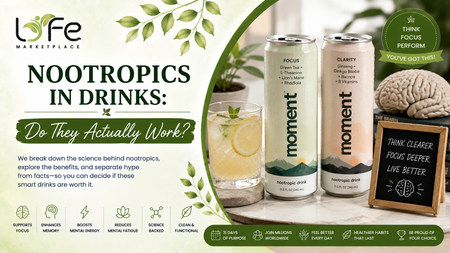
Moment — Ashwagandha-forward calm drink. 200mg KSM-66 ashwagandha per can. Clean, lightly flavored. Designed specifically to replace the 'wind down' ritual of an evening drink without the alcohol.
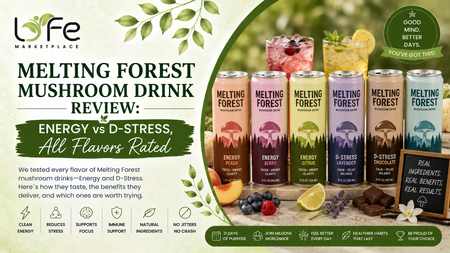
Melting Forest — Mushroom-based energy drinks featuring lion's mane and cordyceps. One of the most flavor-forward functional drink brands — tastes like a premium sparkling juice, functions like a serious nootropic stack.
Magic Mind — 2-oz nootropic shot containing lion's mane, ashwagandha, bacopa, and L-theanine alongside clean caffeine. For people who need focused cognitive performance without the cortisol-spiking anxiety of strong coffee.
Odyssey Elixir — Lion's mane and cordyceps in a sparkling beverage format. Strong on the cognitive performance angle. The Energy and Focus variety is particularly popular with professionals replacing their afternoon coffee.
Frequently Asked Questions
How long does it take for adaptogens to work?
This is the most important expectation to set correctly. Adaptogens are not acute supplements — they do not produce noticeable effects in the first 20–30 minutes like caffeine. Most research shows meaningful benefits emerging after 2–4 weeks of consistent daily use, with optimal effects at 6–8 weeks. This is because adaptogens work by gradually modulating your HPA axis and stress-response system — a process that requires sustained exposure. Start with one adaptogen drink per day, maintain consistency, and assess how you feel after a full month.
Are adaptogen drinks safe to consume every day?
For most healthy adults, yes — adaptogen drinks at the doses found in commercial beverages (typically 150–500mg of standardized extract per serving) are safe for daily consumption. The major exceptions are: pregnancy and breastfeeding (consult your doctor before using any adaptogenic product), thyroid conditions (ashwagandha can influence thyroid hormone levels), and anyone on immunosuppressant medications (reishi and other mushrooms have immunomodulatory effects). If in doubt, always check with your healthcare provider.
What's the difference between adaptogens in drinks vs capsules?
Both delivery formats can be effective, but drinks offer distinct advantages: they integrate into a daily ritual more naturally, some compounds may have better liquid-state bioavailability, and the act of drinking something satisfying is itself a stress-reduction behavior. The key variable is the standardization and dose of the extract — look for named extract standards like KSM-66 (ashwagandha) or specific beta-glucan percentages (mushrooms) to ensure you're getting a therapeutically relevant dose rather than a marketing-level sprinkle.
Can I take multiple adaptogens together?
Yes, and this is actually how many of the best functional beverages are formulated. Certain adaptogen combinations are synergistic: ashwagandha + bacopa for calm mental clarity, rhodiola + lion's mane for stamina and cognitive focus, cordyceps + reishi for energy and immune support. The main caution is to start with one or two and monitor your response before adding more — and to avoid doubling up on stimulating adaptogens (like rhodiola and cordyceps together) late in the day, as they may interfere with sleep.
|
Ready to Try Adaptogen Drinks? Explore our full range of adaptogenic and nootropic drinks at Lyfe Marketplace — ashwagandha, lion's mane, rhodiola, and more, curated from the best functional beverage brands in the US. |