Here is a fact that most people find genuinely startling when they first encounter it:
|
95% of your body's serotonin is produced in your gut — not your brain Mawe & Hoffman, Nature Reviews Gastroenterology & Hepatology (2013) — confirmed in multiple subsequent reviews |
Serotonin is one of the most important neurotransmitters for mood regulation, emotional stability, and sleep. It's the molecule that antidepressant medications (SSRIs) target. And the vast majority of it is not produced where most people assume.
This single fact reframes everything we think we know about mental health and diet. If most of your mood-regulating serotonin is manufactured in your gut — by cells that respond directly to what you eat and drink, and to the health of the bacteria living in your digestive system — then the state of your gut microbiome is directly relevant to how you feel mentally.
This is the gut-brain axis: a bidirectional communication network so sophisticated that researchers now refer to the enteric nervous system (the 100 million+ neurons embedded in your gut lining) as the "second brain." It operates semi-independently, processes information in parallel with your central nervous system, and maintains constant chemical dialogue with your brain via four distinct pathways.
This guide covers the complete science — the four communication pathways, what happens when gut health is compromised, and which specific drinks at Lyfe Marketplace have legitimate mechanistic reasons to support your gut-brain axis.
The Enteric Nervous System: Why Scientists Call Your Gut the 'Second Brain'
The enteric nervous system (ENS) is an extensive network of 100–500 million neurons embedded in the walls of your gastrointestinal tract — from the esophagus to the rectum. To put that in perspective: that's more neurons than your spinal cord contains.
The ENS can function completely independently of your brain — regulating digestion, sensing the gut environment, and communicating with gut microbes — without a single signal from your central nervous system. It produces and responds to the same neurotransmitters your brain uses: serotonin, dopamine, acetylcholine, GABA, norepinephrine.
The 'second brain' label isn't metaphorical — it reflects the genuine neural complexity of this system. And its connection to mental health runs in both directions: your brain affects your gut (stress causes digestive symptoms), and your gut affects your brain (gut microbiome disruption influences mood, cognition, and stress responses).
|
🔬 The Gut-Brain Axis — 2025 Research Update A comprehensive review published in Frontiers in Microbiomes (2025) by researchers at the Universities of Calgary and Islamic Azad University confirmed: the gut microbiome acts as a pivotal modulator of brain function through intricate bidirectional communication along the gut-brain axis. Key findings: microbial communities influence neurodevelopment, neurotransmission, and behavior via pathways involving the vagus nerve, immune signaling, and microbiota-derived metabolites. A concurrent PMC review (Rathore et al., 2025) linked gut dysbiosis specifically to anxiety, depression, and stress-related conditions — with decreased short-chain fatty acid (SCFA) production and increased neuroinflammation identified as central mechanisms. |
The 4 Communication Pathways Between Your Gut and Brain
The gut and brain don't communicate through a single channel — they maintain dialogue through four distinct, simultaneous pathways. Each pathway provides a different mechanism through which what you eat and drink can influence your mental state.
|
Pathway 1: The Vagus Nerve The physical superhighway — 80% of signals travel gut → brain ⚡ How it works: The vagus nerve is the longest cranial nerve in the body, running from the brainstem down through the chest and into the abdomen. It contains approximately 100,000 nerve fibers — and critically, about 80% of those fibers are afferent (carrying signals FROM the gut TO the brain), not the other way around. Gut bacteria communicate with vagal nerve endings through the release of signaling molecules, triggering the vagus nerve to relay information directly to the brainstem, where it influences mood regulation, stress response, and autonomic nervous system function. 🔑 Key molecule: Vagal afferent nerve fibers — activated by gut bacterial metabolites and enterochromaffin cell secretions 🧠 Mental health link: Vagus nerve dysfunction is associated with anxiety, depression, and IBS. Vagal stimulation has been shown to reduce anxiety and depression symptoms. A healthy gut microbiome maintains healthy vagal signaling — disrupting the microbiome disrupts vagal function. 🥤 Drink connection: Prebiotic sodas (OLIPOP, Poppi) feed beneficial bacteria that produce the metabolites activating vagal nerve endings. Fermented drinks support microbial diversity that maintains vagal tone. |
|
Pathway 2: Neurotransmitter Production Gut bacteria synthesize your mood chemicals directly ⚡ How it works: Specific strains of gut bacteria can synthesize neurotransmitters or their direct precursors. Enterochromaffin cells in the gut produce 95% of the body's serotonin from tryptophan — but only in the presence of the right gut microbial environment. Gut bacteria also produce GABA (the nervous system's primary calming neurotransmitter), influence dopamine precursor availability, and modulate norepinephrine synthesis. These gut-produced neurotransmitters primarily act locally on enteric neurons, but they also influence central neurotransmitter systems through vagal signaling and other pathways. 🔑 Key molecule: Serotonin (5-HT), GABA, dopamine precursors — produced by Bifidobacterium, Lactobacillus, Oscillibacter, and other commensal bacteria 🧠 Mental health link: Dysbiosis (reduced microbial diversity, overgrowth of harmful bacteria) reduces serotonin synthesis, GABA production, and tryptophan availability — creating conditions that resemble the neurochemical environment of depression and anxiety. 🥤 Drink connection: Prebiotic drinks feed Bifidobacterium and Lactobacillus specifically — the strains most associated with serotonin and GABA modulation. Inulin-containing drinks (chicory root fiber in OLIPOP) have demonstrated Bifidobacterium growth promotion in clinical studies. |
|
Pathway 3: Short-Chain Fatty Acids (SCFAs) The metabolic messengers that cross the blood-brain barrier ⚡ How it works: When beneficial gut bacteria ferment prebiotic dietary fiber, they produce short-chain fatty acids (SCFAs) — primarily butyrate, propionate, and acetate. These small molecules can cross the blood-brain barrier and directly influence brain function. Butyrate specifically has been shown to: reduce neuroinflammation, increase BDNF (brain-derived neurotrophic factor — critical for neuroplasticity and mood), enhance serotonin availability, and modulate the hypothalamic-pituitary-adrenal (HPA) axis stress response. SCFAs also strengthen the gut epithelial barrier, preventing 'leaky gut' — a condition where bacterial toxins enter the bloodstream and trigger systemic inflammation linked to depression. 🔑 Key molecule: Butyrate, propionate, acetate — produced by bacterial fermentation of prebiotic dietary fiber (inulin, resistant starch, pectin) 🧠 Mental health link: Low SCFA production is a consistent finding in people with depression, anxiety, and cognitive decline. Increased dietary fiber and prebiotic consumption increases SCFA production, reduces neuroinflammation, and is associated with improved mood scores in multiple studies. 🥤 Drink connection: This is the most direct mechanistic argument for prebiotic sodas and fiber-containing functional drinks. Every gram of prebiotic fiber you consume becomes substrate for SCFA-producing bacteria. OLIPOP (9g fiber/can from chicory inulin, cassava root) and Poppi (2g agave inulin) both support SCFA production, though at different magnitudes. |
|
Pathway 4: Immune Signaling The inflammation pathway — how a compromised gut inflames your brain ⚡ How it works: Approximately 70–80% of the immune system resides in the gut. Gut bacteria play a central role in regulating immune function — maintaining a balanced immune response that fights pathogens without creating excessive inflammation. When gut dysbiosis occurs, this regulation breaks down: gut permeability increases ('leaky gut'), bacterial lipopolysaccharides (LPS) — fragments of bacterial cell walls — enter the bloodstream, triggering systemic inflammation. Pro-inflammatory cytokines (IL-6, TNF-α, IL-1β) cross the blood-brain barrier and drive neuroinflammation — a condition increasingly associated with depression, cognitive decline, and anxiety. Conversely, a diverse, healthy microbiome suppresses inflammatory cytokine production and maintains the intestinal barrier. 🔑 Key molecule: Cytokines (IL-6, TNF-α, IL-1β), lipopolysaccharides (LPS), intestinal barrier proteins (claudin, occludin) 🧠 Mental health link: Multiple meta-analyses confirm elevated inflammatory markers in depression and anxiety. Neuroinflammation — driven partly by gut dysbiosis — is now considered a central mechanism of treatment-resistant depression. Anti-inflammatory dietary interventions that restore gut barrier function show promising adjunctive benefits. 🥤 Drink connection: Lion's mane mushroom drinks (Melting Forest, Odyssey Elixir) contain beta-glucans and polysaccharides that inhibit IL-6 and TNF-α. Adaptogen drinks (ashwagandha, reishi) reduce cortisol-driven inflammation. Prebiotic drinks restore gut barrier integrity, reducing LPS translocation. |
Dysbiosis: What Happens When Your Gut Microbiome Is Disrupted
Gut dysbiosis refers to an imbalance in the gut microbiome — reduced microbial diversity, overgrowth of harmful bacteria, or loss of key commensal species. Given the four communication pathways above, it's not surprising that gut dysbiosis has measurable mental health consequences:
|
Dysbiosis Consequence |
Brain Effect |
Research Status |
|
↓ SCFA production |
Reduced BDNF, increased neuroinflammation, impaired serotonin availability |
⭐⭐⭐⭐⭐ Strong — multiple RCTs |
|
↓ Serotonin synthesis |
Mood instability, sleep disruption, emotional dysregulation |
⭐⭐⭐⭐⭐ Strong — mechanistically established |
|
↑ LPS translocation |
Systemic inflammation → neuroinflammation → depressive symptoms |
⭐⭐⭐⭐ Moderate-Strong |
|
↓ GABA production |
Increased anxiety, reduced stress tolerance, hyperactivation of stress circuits |
⭐⭐⭐⭐ Moderate |
|
↓ Vagal tone |
Reduced emotional regulation, increased reactivity, GI distress with mental symptoms |
⭐⭐⭐ Moderate (human studies) |
|
↑ Cortisol sensitivity |
HPA axis dysregulation — chronic stress response that won't 'turn off' |
⭐⭐⭐⭐ Moderate-Strong |
Common causes of gut dysbiosis in modern life: antibiotic use (which kills beneficial alongside harmful bacteria), ultra-processed food diets (low fiber, high sugar, artificial additives), chronic stress (which alters gut motility and microbial composition), alcohol consumption, and lack of dietary diversity.
This is directly relevant to the sober-curious movement: alcohol is one of the most potent drivers of gut dysbiosis, killing beneficial bacteria and increasing gut permeability. Reducing or eliminating alcohol is one of the most impactful gut microbiome interventions available — with measurable improvements in microbial diversity within 2–4 weeks of abstinence. For the full picture on anxiety specifically, our guide on drinks that actually help with anxiety covers the neurotransmitter mechanisms — many of which trace back to the gut-brain axis mechanisms described in this guide.
5 Drinks That Support Your Gut-Brain Axis — With Mechanism Explanations
These five drink categories have legitimate, mechanism-based reasons to support gut-brain axis health. We're not just saying they're 'good for gut health' — we're explaining exactly how they work at the biochemical level and why that translates to potential mental health support.
For a deeper understanding of the prebiotic vs probiotic distinction — which directly affects how you should interpret fiber claims on drink labels — our detailed breakdown of the difference between prebiotics and probiotics is the most important companion read to this guide.
|
1. Prebiotic Sodas (OLIPOP / Poppi) Gut-brain mechanism: Provides prebiotic fiber that feeds Bifidobacterium and Lactobacillus — the bacteria most associated with serotonin modulation and GABA production. Inulin-type fructans (OLIPOP's chicory root inulin, cassava root) specifically increase these strains in controlled clinical studies. These bacteria then produce SCFAs (butyrate, propionate) that cross the blood-brain barrier, increase BDNF, and reduce neuroinflammation. Active ingredient: Chicory root inulin + cassava root fiber (OLIPOP: 9g/can) / Agave inulin (Poppi: 2g/can) Evidence quality: ⭐⭐⭐⭐⭐ Strong mechanistic basis. Clinical evidence for inulin-type fructans increasing Bifidobacterium. Indirect evidence through SCFA pathway for mood support. 🛒 At Lyfe Marketplace: OLIPOP (Watermelon Lime, Vintage Cola, Strawberry Vanilla) and Poppi — both available in /collections/health-wellness |
|
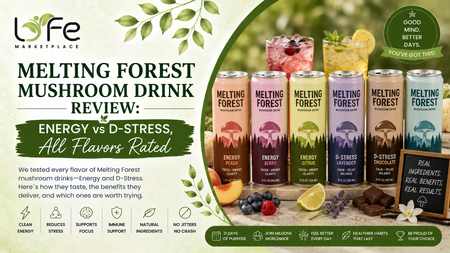
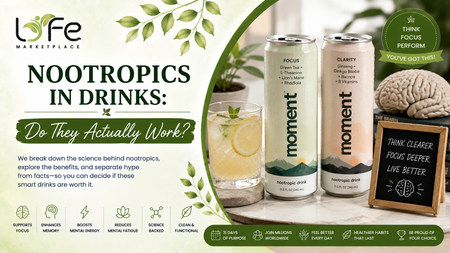
2. Adaptogen Drinks (Ashwagandha / Reishi) Gut-brain mechanism: Dual action on gut-brain axis: (1) Ashwagandha reduces cortisol via HPA axis modulation, which reduces cortisol-induced gut dysbiosis — chronic stress is a significant driver of microbiome disruption. (2) Reishi's beta-glucans modulate intestinal immune function, reduce LPS-triggered inflammation, and support gut barrier integrity — directly addressing the immune signaling pathway of gut-brain communication. Active ingredient: KSM-66 ashwagandha (cortisol pathway), Reishi beta-glucans (immune/barrier pathway) Evidence quality: ⭐⭐⭐⭐ Strong for HPA axis modulation. ⭐⭐⭐ Moderate for gut-specific effects. The combination addresses two distinct pathways simultaneously. 🛒 At Lyfe Marketplace: Moment Calm, Melting Forest adaptogen beverages — available in /collections/adaptogenic-nootropic |
|
3. Lion's Mane Mushroom Drinks Gut-brain mechanism: Lion's mane polysaccharides act as prebiotics — selectively feeding beneficial gut bacteria that improve short-chain fatty acid production. Simultaneously, lion's mane's direct NGF-stimulating compounds (hericenones and erinacines) support neuronal health. The combination creates a dual gut-and-brain intervention: prebiotic support through the gut-brain axis AND direct neuroprotection at the brain level. Active ingredient: Hericium erinaceus polysaccharides (prebiotic gut effect) + hericenones/erinacines (direct NGF stimulation) Evidence quality: ⭐⭐⭐⭐ Moderate — emerging evidence for gut microbiome modulation. Strong evidence for direct neurological effects (see our lion's mane deep dive). 🛒 At Lyfe Marketplace: Odyssey Elixir, Melting Forest mushroom drinks — available in /collections/adaptogenic-nootropic |
|
4. Electrolyte Drinks with Magnesium Gut-brain mechanism: Magnesium deficiency is a consistent finding in gut dysbiosis — the microbiome influences magnesium absorption in the intestine. Magnesium supplementation improves GABA receptor sensitivity (the same pathway impaired by gut dysbiosis), reduces cortisol, and supports the blood-brain barrier. Replenishing magnesium through electrolyte drinks addresses a deficiency commonly caused by gut dysbiosis while simultaneously supporting the neurotransmitter systems that gut bacteria influence. Active ingredient: Magnesium malate (LMNT: 60mg/serving), magnesium glycinate (highest bioavailability forms) Evidence quality: ⭐⭐⭐⭐ Strong for magnesium's mental health effects. ⭐⭐⭐ Moderate for gut-specific connection in beverage form. 🛒 At Lyfe Marketplace: LMNT Electrolyte Drinks — available in /collections/electrolyte-infused |
|
5. Matcha / L-Theanine Drinks Gut-brain mechanism: L-theanine is a unique amino acid that: (1) crosses the blood-brain barrier and directly increases alpha brain wave activity and GABA production, (2) supports serotonin synthesis by increasing tryptophan availability, and (3) modulates the gut microbiome by reducing Clostridium and other dysbiosis-associated bacteria while supporting beneficial strains. Matcha delivers L-theanine in a natural matrix alongside EGCG (epigallocatechin gallate) — a polyphenol with prebiotic-like effects on the gut microbiome. Active ingredient: L-theanine (200mg in quality matcha drinks) + EGCG polyphenols (prebiotic-like microbiome modulation) Evidence quality: ⭐⭐⭐⭐ Strong for L-theanine's direct neurological effects. ⭐⭐⭐ Emerging for gut microbiome modulation via EGCG. 🛒 At Lyfe Marketplace: Jibby Matcha Latte — available in /collections/health-wellness |
Beyond Individual Drinks: The Dietary Pattern That Supports Gut-Brain Health
Individual functional drinks are genuine tools, but the broader dietary pattern matters more than any single product. Here's what the 2025 research consensus looks like for diet-gut-brain axis health:
What Feeds a Mentally Healthy Gut Microbiome
• Diverse fiber sources — aim for 30+ different plant foods per week. Variety in fiber sources creates microbial diversity.
• Prebiotic foods and drinks — chicory root, Jerusalem artichoke, garlic, onion, leeks, and prebiotic sodas all feed specific beneficial bacterial strains
• Fermented foods — yogurt, kefir, kimchi, sauerkraut introduce live beneficial bacteria (though their colonization in the gut is temporary and needs ongoing dietary support)
• Polyphenol-rich foods and drinks — berries, dark chocolate, green tea, olive oil — polyphenols act as prebiotics and have anti-inflammatory properties
• Omega-3 fatty acids — salmon, walnuts, flaxseed — reduce neuroinflammation and support the gut barrier
What Disrupts the Gut-Brain Axis
• Alcohol — reduces microbial diversity, increases gut permeability, drives LPS translocation within hours of consumption
• Ultra-processed foods — artificial additives, emulsifiers (carboxymethylcellulose, polysorbate 80) directly disrupt gut barrier integrity
• High-sugar diets — feed Firmicutes overgrowth at the expense of beneficial Bacteroidetes
• Chronic stress without recovery — elevated cortisol alters gut motility and selectively kills beneficial strains
• Antibiotic overuse — broad-spectrum antibiotics can reduce microbial diversity for months or years
|
🧬 The Bidirectional Opportunity The most powerful insight from gut-brain axis research is this: improving your gut health can improve your mental health, AND improving your mental health (reducing stress, improving sleep) can improve your gut health. This bidirectionality means that positive interventions in either direction compound over time. A prebiotic soda that feeds your beneficial bacteria, combined with an adaptogen drink that reduces cortisol, creates a bidirectional gut-brain benefit greater than either alone — the cortisol reduction protects the microbiome, and the microbiome improvement reduces the neuroinflammation that makes stress harder to manage. |
This is also why the combination of sober-curious lifestyle choices and functional drink choices is genuinely synergistic: removing alcohol reduces gut dysbiosis, and replacing it with prebiotic sodas and adaptogen drinks actively rebuilds the microbiome that alcohol was damaging. For the sleep dimension of this picture — since gut health significantly affects sleep quality through serotonin's role in melatonin synthesis — our guide on non-alcoholic drinks for better sleep covers the specific drink approaches most supported by this same gut-brain-sleep pathway.
A Practical Daily Drink Protocol for Gut-Brain Axis Support
Putting it all together into a practical daily approach — one that works with your existing routine rather than requiring a complete dietary overhaul:
|
Time of Day |
Recommended Drink |
Gut-Brain Pathway Targeted |
|
Morning |
Jibby Matcha Latte (L-theanine + EGCG) |
Serotonin synthesis support + microbiome-friendly polyphenols. Calm alertness without cortisol spike. |
|
With breakfast |
OLIPOP or Poppi prebiotic soda |
Inulin fiber → Bifidobacterium growth → SCFA production → BDNF and serotonin support. |
|
Mid-morning |
Moment adaptogen drink (ashwagandha) |
HPA axis modulation → cortisol reduction → protective effect on gut microbiome. |
|
Afternoon |
Odyssey Elixir or Melting Forest (lion's mane) |
Direct NGF support + polysaccharide prebiotics for gut microbial diversity. |
|
Before exercise |
LMNT electrolytes (magnesium) |
Magnesium supports GABA signaling. Exercise itself is a major microbiome-positive intervention. |
|
Evening |
Second OLIPOP or herbal sparkling water |
Continued prebiotic fiber → nighttime SCFA production → improved gut barrier during sleep. |
Frequently Asked Questions
Can improving my gut health actually improve my mood?
The scientific evidence says: yes, for many people, improving gut microbiome health through diet produces measurable mood improvements — particularly for mild-to-moderate mood disturbance, anxiety, and cognitive fog. Multiple clinical studies show that prebiotic and probiotic interventions improve scores on validated mood and anxiety assessment scales. A 2021 meta-analysis of 34 controlled trials found that probiotic and prebiotic interventions significantly reduced depression and anxiety scores. However, the effect sizes are generally modest, and the research is clearest in populations with existing dysbiosis (poor diet, IBS, antibiotic history). If you have a diagnosed mental health condition, gut-supporting dietary changes are best approached as complementary to — not replacements for — professional treatment.
How long does it take for gut changes to affect mental health?
Gut microbiome composition can begin shifting within 24–72 hours of significant dietary changes — but meaningful, stable shifts in microbial community structure typically require 4–8 weeks of consistent dietary pattern change. Most clinical trials studying diet and mental health measure outcomes at 4–12 weeks. The practical implication: if you switch to a prebiotic-rich diet and reduce alcohol and ultra-processed foods, expect to notice subtle improvements in energy, sleep quality, and mood stability within 2–4 weeks, with more significant effects at 6–8 weeks. Gut health is a chronic investment — like exercise for the body, it requires consistency.
Is there a difference between prebiotic drinks and probiotic drinks for gut-brain health?
Yes — meaningfully different mechanisms. Prebiotic drinks (OLIPOP, Poppi) contain fiber that feeds existing beneficial bacteria in your gut — supporting their growth and SCFA production. Probiotic drinks (kombucha, kefir) introduce live bacteria, but their colonization is typically transient — they don't permanently establish unless your gut environment already supports them. The emerging scientific consensus suggests that prebiotics may be more reliable for gut microbiome support than probiotics in healthy adults, because prebiotics work with your existing microbial community rather than introducing potentially incompatible strains. Our detailed guide on the difference between prebiotics and probiotics covers this distinction in depth.
Does alcohol really damage the gut-brain axis?
Yes, and significantly. Alcohol consumption — even moderate drinking — measurably reduces gut microbial diversity within hours. Alcohol increases intestinal permeability ('leaky gut'), allowing LPS (bacterial endotoxins) to enter the bloodstream and trigger systemic inflammation. It specifically depletes Lactobacillus and Bifidobacterium — the strains most associated with serotonin and GABA regulation. Regular alcohol consumption is associated with significantly elevated inflammatory markers (IL-6, CRP) that drive neuroinflammation and are found in elevated concentrations in people with depression. Within 2–4 weeks of alcohol cessation, gut microbial diversity begins recovering. This is one of the most compelling gut-brain axis arguments for the sober-curious approach.
|
Support Your Gut-Brain Axis with Lyfe Marketplace Prebiotic sodas, adaptogen drinks, probiotic beverages, and functional wellness drinks — curated for gut health and mental wellbeing. Ships same day from Texas. |