The word 'nootropic' has been through a remarkable journey in the past decade — from niche biohacker terminology to mainstream marketing language plastered across everything from sparkling waters to adaptogen shots to canned cocktail alternatives.
Walk into any Whole Foods or upscale grocery store in 2026 and you'll find dozens of drinks making some version of this promise: 'improves focus,' 'enhances cognition,' 'boosts brain performance.' The global nootropic beverage market was valued at over £3 billion in 2022 and is projected to exceed £8.8 billion by 2030. That's a lot of money riding on the claim that what you drink can make you smarter.
So here's the question this guide is actually going to answer, with honesty and citations: do nootropic drinks actually work?
The honest, evidence-based answer is: yes, some of them do — for specific ingredients, at adequate doses, with realistic expectations about what 'working' means. And no, many of them don't — because they contain the right ingredients at inadequate doses, or they promise effects that even well-dosed nootropics can't deliver.
This guide gives you the framework to tell the difference. By the end, you'll know exactly which ingredients have real evidence, what doses are needed for effects, why delivery format (beverage vs capsule) matters, and what to look for on a label to separate genuine functional drinks from marketing noise.
What Does 'Nootropic' Actually Mean? (And What It Doesn't)
The term nootropic was coined in 1972 by Romanian psychologist and chemist Dr. Corneliu Giurgea, who synthesized the first synthetic nootropic (piracetam) and established the criteria for what qualifies as one. His original definition required that a substance:
• Enhance learning and memory
• Support the brain under disruptive conditions (stress, hypoxia, electroconvulsive shock)
• Protect the brain from physical and chemical injury
• Increase the efficacy of neuronal firing control mechanisms
• Possess extremely low toxicity with no side effects of classic psychostimulants
Notice what Giurgea's definition does not include: immediate dramatic mental clarity, superhuman focus, or the experience of suddenly becoming a different, smarter person. That experience is what caffeine and amphetamines produce — and those are stimulants, not nootropics in the classical sense.
Modern usage has expanded the term considerably. Today's nootropics category includes natural compounds — plant extracts, amino acids, and mushroom-derived molecules — that support cognitive function through mechanisms like neurotransmitter optimization, neuroplasticity support, cerebral blood flow enhancement, and neuroprotection. The effects are typically subtle, cumulative, and depend heavily on consistent use rather than single-dose dramatic impact.
|
🔬 The 2025 Ohio State University Survey — Where Americans Stand on Cognitive Enhancement In a June 2025 national survey commissioned by The Ohio State University Wexner Medical Center (n=1,005 US adults), researchers found that Americans' interest in cognitive performance enhancement was at record levels — driven by workplace performance pressure, digital distraction, and the growing desire for clean alternatives to caffeine dependence. The survey found that functional beverages were the most preferred delivery format for cognitive support among adults aged 25–45, outranking supplements, prescriptions, and lifestyle interventions in terms of adoption intent. This demand is what's driving the nootropic beverage market's explosive growth. |
The distinction between adaptogens and nootropics is worth clarifying because they're frequently conflated. Adaptogens (ashwagandha, rhodiola, reishi) primarily modulate the stress-response system — the HPA axis and cortisol. Nootropics primarily enhance cognitive function directly — memory, focus, processing speed, neuroplasticity. Many ingredients bridge both categories (rhodiola, lion's mane), but the distinction helps clarify what you're actually trying to achieve. Our complete adaptogens guide covers the stress-modulation side of this in full detail.
The 6 Most Evidence-Backed Nootropic Ingredients in Functional Drinks
Based on the current peer-reviewed evidence — 2025-2026 systematic reviews, meta-analyses, and human RCTs — these are the six natural nootropic ingredients with the most credible claims. Each card includes the clinical study dose versus the typical beverage dose — a gap that is critical to understand.
|
L-Theanine ⚡ Mechanism: Amino acid found naturally in green tea (Camellia sinensis). Crosses the blood-brain barrier and increases alpha brain wave activity — the relaxed-alert state. Enhances GABA production, modulates serotonin and dopamine, reduces cortisol-driven anxiety. When combined with caffeine, improves sustained attention, processing speed, and accuracy on cognitive tasks beyond what either compound achieves alone. ⏱ When it works: Acute effects within 30–60 minutes. Calm focus without sedation. The caffeine + L-theanine combination is the most reliably fast-acting nootropic pairing available. 💊 Clinical study dose: 200–400mg L-theanine (often in 100–200mg caffeine : 200–400mg theanine ratios for combined stacks) 🥤 Typical beverage dose: 50–200mg per serving — varies significantly by brand. Matcha naturally contains ~25–45mg per serving; supplemented drinks typically deliver 50–200mg. Evidence: ⭐⭐⭐⭐⭐ STRONG — Multiple RCTs in humans. The 2010 Giesbrecht study confirmed attention and alertness improvements. 2008 Journal of Nutrition confirmed alpha wave modulation. Best-evidenced natural nootropic alongside caffeine. 🛒 Available in: Jibby Matcha Latte (natural L-theanine), Moment adaptogen drinks (L-theanine listed), Magic Mind shots |
|
Bacopa Monnieri ⚡ Mechanism: Ayurvedic herb with documented use for over 3,000 years. Contains bacosides A and B — compounds that enhance dendritic branching (the connections between neurons), reduce anxiety through GABAergic mechanisms, and protect neurons from oxidative damage. Uniquely, bacopa improves memory consolidation — the process by which short-term information converts to long-term memory. ⏱ When it works: SLOW — requires 8–12 weeks of consistent daily use before measurable memory improvements appear. Patience is non-negotiable. Users who take bacopa for 2 weeks and notice nothing are not giving it fair evaluation. 💊 Clinical study dose: 300–600mg standardized bacopa extract (45% bacosides) per day 🥤 Typical beverage dose: Rarely found in beverages at clinical doses. Most beverage inclusions are at 50–150mg — potentially effective at long-term dosing but lower than clinical studies used. Evidence: ⭐⭐⭐⭐ MODERATE-STRONG — Multiple human RCTs. A 2001 Australian study (Stough et al., Psychopharmacology) found significant memory improvements at 12 weeks. Meta-analysis of 9 RCTs confirmed memory retention benefits. 🛒 Available in: Uncommon in mainstream functional beverages at clinical doses. Increasingly appearing in premium cognitive shot formats. |
|
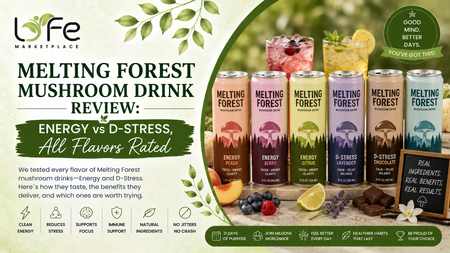
Lion's Mane Mushroom (Hericium erinaceus) ⚡ Mechanism: The only edible mushroom known to stimulate Nerve Growth Factor (NGF) synthesis through hericenones and erinacines. Unlike most nootropics that work on existing neurotransmitter systems, lion's mane supports the actual growth and maintenance of neurons — a mechanism called neurogenesis. A 2025 Frontiers in Nutrition systematic review of 26 studies confirmed BDNF production and hippocampal neurogenesis effects. ⏱ When it works: LONG-TERM neuroprotective rather than acute cognitive booster. Northumbria University 2023 RCT showed improvements at 28 days — some acute effects noted within 60 minutes in the 2025 Frontiers in Nutrition data. Full neuroprotective benefits require months of consistent use. 💊 Clinical study dose: 1,800–3,000mg fruiting body powder daily (Mori 2009). Standardized extracts may be effective at 750–1,500mg. 🥤 Typical beverage dose: 150–750mg per beverage — lower than most clinical study doses but emerging evidence suggests standardized extracts may produce some benefits at lower doses. Evidence: ⭐⭐⭐⭐ MODERATE-STRONG — 2025 Menon et al. systematic review of 26 studies. Mori 2009 RCT. Northumbria 2023 pilot RCT. Most interesting mechanism (NGF) of any dietary nootropic. 🛒 Available in: Odyssey Elixir (lion's mane + cordyceps), Melting Forest mushroom drinks, Magic Mind shots |
|
Rhodiola Rosea ⚡ Mechanism: Siberian adaptogen containing rosavins and salidroside. Reduces mental fatigue by modulating monoamine neurotransmitters (serotonin, dopamine, norepinephrine). Decreases cortisol production. Specifically studied for cognitive performance under conditions of stress and fatigue — making it particularly relevant for people experiencing burnout rather than healthy baseline enhancement. ⏱ When it works: MEDIUM — acute anti-fatigue effects may be noticeable within 30–60 minutes for some users. Sustained cognitive benefits with 4–8 weeks of consistent use. 💊 Clinical study dose: 200–600mg standardized extract (3% rosavins, 1% salidroside) per day 🥤 Typical beverage dose: 50–300mg per beverage — some products meet the effective range. Look for standardized extract labeling specifying rosavin and salidroside percentages. Evidence: ⭐⭐⭐⭐ MODERATE-STRONG — Multiple human RCTs specifically on cognitive fatigue. 2000 Darbinyan et al. (Phytomedicine) found significant anti-fatigue effects in stressed physicians. 2009 Shevtsov et al. confirmed acute mental performance improvement. 🛒 Available in: Adaptogen drinks featuring rhodiola — check for standardized extract. Melting Forest D-Stress formula. |
|
Citicoline (CDP-Choline) ⚡ Mechanism: Delivers two cognitively active components: choline (precursor to acetylcholine — the neurotransmitter of memory and learning) and cytidine (converts to uridine, supporting brain cell membrane repair and maintenance). Increases brain energy metabolism and supports phospholipid synthesis — the structural fats of cell membranes. A 2015 study in Food and Nutrition Sciences found MRI-confirmed increased frontal lobe energy activity after citicoline supplementation. ⏱ When it works: Relatively acute for attention (some effects at 1–2 hours). Sustained memory benefits with consistent use over weeks. 💊 Clinical study dose: 250–500mg per day. The most effective doses in clinical trials were 250mg and 500mg daily. 🥤 Typical beverage dose: Rare in functional beverages — most beverages don't include citicoline. More commonly found in cognitive supplement capsules. Some advanced nootropic shots include it. Evidence: ⭐⭐⭐⭐ MODERATE-STRONG — 2015 Food and Nutrition Sciences MRI study (frontal lobe activation confirmed). Multiple trials showing attention and processing speed improvements. 🛒 Available in: Rarely in drinks — primarily available in capsule/supplement form. Watch for inclusion in premium cognitive shot formats. |
|
Caffeine + L-Theanine (The Stack) ⚡ Mechanism: This is the single most evidence-backed nootropic combination available. Caffeine provides acute cognitive stimulation by blocking adenosine receptors (preventing tiredness signals). L-theanine modulates the excitatory effects of caffeine, reducing jitters and anxiety while preserving and enhancing the focus benefits. Research consistently shows this combination outperforms either compound alone across measures of sustained attention, working memory, and reaction time. ⏱ When it works: ACUTE — within 30–60 minutes. The fastest-acting, most reliable nootropic combination available. 💊 Clinical study dose: Standard ratio: 100–200mg caffeine : 200–400mg L-theanine. The 1:2 or 1:3 caffeine:theanine ratio is consistently supported. 🥤 Typical beverage dose: Matcha naturally provides approximately this ratio. Caffeinated functional drinks with added L-theanine can hit the range if doses are disclosed. Evidence: ⭐⭐⭐⭐⭐ STRONGEST — 2008 Journal of Nutrition RCT. 2010 Giesbrecht et al. trial. 2022 Cureus review of multiple trials. Consistent across diverse study populations. 🛒 Available in: Matcha drinks (Jibby Matcha delivers natural caffeine + L-theanine), some functional coffee alternatives |
The Critical Dose Problem: Why Many Nootropic Drinks Underdeliver
Here is the most important thing this guide can tell you — the piece of information the nootropic beverage industry would prefer you didn't focus on:
|
⚠️ The Dose Problem: Most nootropic drinks contain the right ingredients at the wrong doses. Clinical trials that demonstrate cognitive benefits use doses of 300–3,000mg per day for most nootropic ingredients. Most beverages deliver 50–300mg per serving. The dose gap is significant — and for cumulative ingredients like bacopa and lion's mane, it may mean weeks of daily consumption before meaningful effects accumulate at beverage dose levels. Always check the label for exact mg amounts. If a brand doesn't list specific doses, that's a transparency red flag. |
The dose problem isn't a reason to dismiss nootropic drinks entirely — it's a reason to choose them more carefully. Here's how to read between the lines:
|
Label Says |
What It Might Mean |
What To Look For Instead |
|
'Contains lion's mane' |
Could be 50mg token dose or 750mg meaningful dose — no way to know |
Specific mg amount + 'standardized extract' specification |
|
'Proprietary cognitive blend (500mg)' |
Could be 490mg filler + 10mg each of 5 nootropics — each at non-effective dose |
Individual ingredient amounts listed separately |
|
'Boosts brain performance' |
An FDA-prohibited drug claim for supplements. Marks sloppy compliance and potentially inflated claims |
Softer language: 'supports cognitive function' + specific study citations |
|
'With bacopa' |
Unless it says '300mg standardized extract (45% bacosides)', the dose almost certainly won't work within a drink |
Specific bacopa dose + bacoside percentage standardization |
|
'Clinically studied ingredients' |
True but misleading — the INGREDIENT was clinically studied, not the drink at the dose the drink contains |
Dose-matched to actual clinical study amounts |
|
Full transparent panel |
Every ingredient listed with exact mg. The gold standard — rare but it exists |
This is what genuine quality looks like. Always prefer it. |
Our deep dive on lion's mane mushroom specifically covers this dose problem in full detail — including the fruiting body vs mycelium extraction issue that further complicates dose interpretation. It's the most thorough single-ingredient nootropic guide in our content library and a natural extension of this overview.
Beverages vs Capsules: Does the Delivery Format Actually Matter?
This is a question worth addressing directly because it affects how you think about nootropic drinks versus conventional supplements. The honest answer: delivery format matters, but not always in the direction you expect.
Arguments FOR Beverage Delivery
Some nootropic compounds — particularly water-soluble amino acids like L-theanine and certain mushroom polysaccharides — may absorb more efficiently when pre-dissolved in liquid than when compressed into a tablet. Research by Noobru's nutrition team (2026) concluded that 'drinkable formats generally offer superior absorption compared to compressed tablets' for water-soluble compounds.
Beyond absorption, the ritual of drinking matters neurologically. The act of intentional daily consumption — 'this is my morning cognitive support drink' — creates habit context and behavioral anchoring that improves compliance. Adaptogens and cumulative nootropics only work with consistency; beverages that become rituals are consumed more consistently than pills.
Arguments FOR Capsule Delivery
Standardized extract capsules can deliver exact, clinical-study-equivalent doses in ways that beverages currently cannot. A 300mg bacopa monnieri capsule with certified 45% bacosides content is more reliably dosed than a beverage with undisclosed bacopa content. For ingredients where dose precision is paramount (bacopa, citicoline), the capsule format currently wins.
Capsules also allow combining ingredients that would taste terrible together in a drink. Some effective nootropic stacks — citicoline + bacopa + lion's mane at clinical doses — would be unpalatable in beverage form.
The Practical Conclusion
For L-theanine, lion's mane, and adaptogenic nootropics where beverage doses overlap with clinical study ranges and the ritual/compliance advantage matters: nootropic drinks are a legitimate and often superior format. For bacopa and citicoline at clinical doses: capsules remain more reliable.
The difference between adaptogens (stress-focused) and nootropics (cognitive-focused) is important context here. Our complete guide to adaptogens explains why the two categories often work better together than separately — which is exactly how the best functional drinks formulate their stacks.
Setting Realistic Expectations: What Nootropic Drinks Can and Cannot Do
The most common source of disappointment with nootropic drinks is misaligned expectations. Here is the honest performance envelope:
|
✅ What Well-Dosed Nootropic Drinks CAN Deliver |
❌ What Nootropic Drinks CANNOT Deliver |
|
Reduced anxiety and calmer focus during stressful tasks (L-theanine + adaptogens) |
Dramatic, immediately noticeable 'smart drug' effects comparable to stimulants |
|
Improved sustained attention across 2–4 hour work sessions (caffeine + theanine) |
Permanent cognitive enhancement — effects require continued consumption |
|
Gradual improvements in memory consolidation over 8–12 weeks (bacopa) |
Benefits that work independent of sleep, exercise, and nutrition quality |
|
Reduced mental fatigue under conditions of stress or sleep restriction (rhodiola) |
Compensation for clinical cognitive impairment, ADHD, or neurodegenerative disease |
|
Long-term neuroprotection and neurotrophic support (lion's mane, consistent use) |
Effects in the first 1–3 days of consumption for most cumulative ingredients |
|
🧠 The Foundation Principle No nootropic drink compensates for chronic sleep deprivation, dehydration, poor diet, or sedentary lifestyle — these fundamentals have a vastly larger impact on cognitive performance than any supplement. The evidence is consistent: people who sleep 7–8 hours, exercise regularly, eat a nutrient-dense diet, and manage stress effectively perform cognitively at levels that no nootropic stack can match for a person deficient in these basics. Nootropic drinks are genuine add-ons to a healthy foundation — not shortcuts around it. |
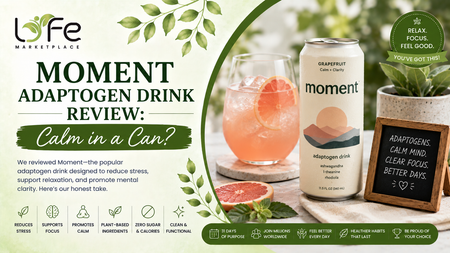
This context is particularly relevant for evaluating products like Moment, which we reviewed in detail. Our Moment adaptogen drink review found that consistent users (2+ weeks) report genuine calm and improved sleep — consistent with what L-theanine and ashwagandha actually deliver when given adequate time. Occasional users (1–3 cans) who notice nothing are experiencing what the evidence predicts for cumulative ingredients.
How to Choose a Genuinely Effective Nootropic Drink: The Buyer's Checklist
Armed with this science, here's the practical buyer's framework — 7 questions to ask before purchasing any nootropic functional drink:
• Does the label list exact mg amounts for every active ingredient? (Non-negotiable transparency requirement — walk away from proprietary blends without mg disclosure)
• Are the key ingredients at doses that overlap with clinical study ranges? (L-theanine: min 100mg; Lion's mane: min 300mg standardized extract; Rhodiola: min 100mg standardized; Bacopa: min 150mg is lower-range but present)
• Does the label specify 'standardized extract' with percentage? (E.g., 'Bacopa Monnieri 300mg, 45% bacosides' — the standardization tells you you're getting active compounds, not just plant powder)
• Is there one or two featured ingredients done properly, or 10+ ingredients at token doses? (Fewer ingredients at higher doses beats many ingredients at homeopathic amounts)
• Does the brand cite specific clinical studies on their website, or just make general efficacy claims? (Cited studies = credibility; vague 'science-backed' language = marketing)
• Is your expectation realistic for the specific ingredient's timeline? (L-theanine: notice same day. Lion's mane: assess at 4 weeks minimum. Bacopa: assess at 10 weeks minimum)
• Are you using this drink as a daily ritual, or occasionally? (All cumulative nootropics require daily use. Occasional consumption of lion's mane or bacopa produces no meaningful effect)
The Best Nootropic Drinks at Lyfe Marketplace Right Now
Filtered through the framework above — which beverages actually meet the quality standard?
• Odyssey Elixir (lion's mane + cordyceps): standardized mushroom extracts, meaningful doses, transparent labeling. For cognitive performance + physical energy combined.
• Melting Forest D-Stress: lion's mane + L-theanine + reishi combination. Honest adaptogen-nootropic stack at meaningful doses.
• Magic Mind nootropic shots: highest ingredient transparency in the category — full mg panel disclosed. Contains lion's mane, ashwagandha, matcha, bacopa, and turmeric at specified doses.
• Jibby Matcha Latte: delivers the caffeine + L-theanine combo naturally from high-quality matcha — the most evidence-backed nootropic pairing available, in the most natural form.
• Moment (sparkling adaptogen drinks): L-theanine + ashwagandha for calm focus. Dose not fully disclosed but real-world user data supports genuine effect with consistent daily use.
Frequently Asked Questions
Are nootropic drinks safe to consume daily?
For the ingredients covered in this guide — L-theanine, lion's mane, rhodiola, bacopa, and citicoline — daily consumption at the doses found in commercial functional beverages has excellent safety profiles in healthy adults. The main exceptions: bacopa can cause GI discomfort (particularly nausea and loose stools) if taken on an empty stomach — always consume with food. Rhodiola is mildly stimulating and should not be consumed in the evening. Some individuals are sensitive to mushroom-derived products — start with one serving and assess response. Anyone on medications (particularly antidepressants, anticoagulants, or thyroid medications) should consult their physician before adding regular nootropic supplements or beverages.
How long do nootropic drinks take to work?
This depends entirely on the specific ingredient. L-theanine (alone or with caffeine): noticeable within 30–60 minutes of consumption — alpha wave activity measurably increases within an hour. Rhodiola: anti-fatigue effects within 30–60 minutes for many users, with sustained benefits accumulating over 4–8 weeks. Lion's mane: some acute mood and cognitive effects possible within 60 minutes (per 2025 Frontiers in Nutrition data), but neuroprotective and memory benefits require 4–16 weeks of consistent daily use. Bacopa: meaningfully studied at 8–12 weeks — do not evaluate efficacy before 8 weeks of daily consumption. The biggest mistake buyers make is quitting any cumulative nootropic within the first 1–2 weeks, before the biological mechanisms have had time to accumulate.
Is the caffeine + L-theanine combination actually better than coffee alone?
Yes — the evidence is consistent that the caffeine + L-theanine combination produces superior cognitive performance versus caffeine alone across several measures. The 2008 Journal of Nutrition RCT found that the combination improved sustained attention, alertness, and task accuracy, while reducing the 'tired' and 'headache' ratings that coffee alone often produces. The mechanism: L-theanine modulates the excitatory effects of caffeine through GABA enhancement and alpha wave promotion, preventing the anxiety and focus oscillation that caffeine alone creates. Matcha naturally contains both compounds in approximately effective ratios — making it the most elegant delivery vehicle for this combination. At the right matcha-to-water ratio, a well-prepared matcha drink delivers roughly 70mg caffeine and 35mg L-theanine — at the lower end of effective, but naturally synergistic.
Are there any nootropics I should avoid in functional drinks?
Yes — several ingredients that appear in some nootropic drinks warrant caution or scepticism. DMAE (dimethylaminoethanol): some evidence for cognitive effects but also reports of overstimulation and headaches; limited long-term safety data. Huperzine A: a reversible acetylcholinesterase inhibitor with genuine cognitive effects, but needs cycling (tolerance builds) and can interact with medications. Synthetic racetams (piracetam, aniracetam): not legal in supplements in the US and rarely found in beverages — but occasionally appear in imports. Very high-dose B6 (above 200mg daily long-term): can cause peripheral nerve damage (peripheral neuropathy). For the ingredients in this guide (L-theanine, lion's mane, rhodiola, bacopa, citicoline), the safety profiles are excellent at recommended doses.
Shop Nootropic & Adaptogen Drinks at Lyfe Marketplace
Odyssey Elixir, Melting Forest, Magic Mind, Moment, and the full range of functional cognitive beverages — curated for quality ingredients and real doses. Ships same day from Texas.
Shop Adaptogen & Nootropic Drinks at Lyfe Marketplace→